
Introduction: The Island of Perpetual Transformation
From the southern limestone cliffs of Uluwatu to the black sands of the north, Bali is divided into distinct “kingdoms” of experience. This guide serves as an objective, editorial roadmap to every corner of the island, designed for the traveler who seeks both the pulse of the modern world and the silence of the ancient one.
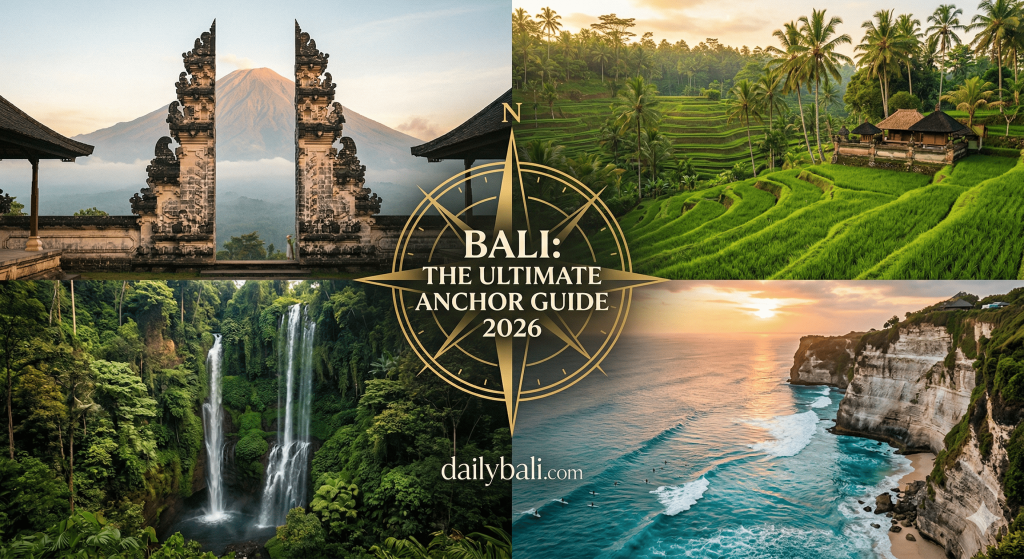
1. South Bali: The Epicenter of Modern Lifestyle
South Bali is the island’s engine room. It is a vibrant, sun-drenched region where traditional Hindu processions frequently halt traffic for luxury SUVs. This is the hub of “Boutique Bali,” where global trends in gastronomy and design are born.
Seminyak: The Heritage of Sophistication
Seminyak remains the undisputed capital of Bali’s high-end lifestyle. Unlike the raw, youthful energy of Kuta, Seminyak offers a refined experience centered around Jalan Laksmana (Eat Street) and the Petitenget district.
- The Vibe: Sophisticated, fashionable, and vibrant.
- Key Experience: Beyond the beach clubs, Seminyak is home to some of the island’s most important “Sea Temples.” Pura Petitenget, founded in the 16th century, serves as a spiritual anchor amidst the luxury resorts.
- Gastronomy: Seminyak is where “Fine-Casual” dining was perfected, hosting the highest density of world-class chefs in Southeast Asia.
Canggu & Pererenan: The Creative Frontier
Canggu has matured from a sleepy surf village into a global hub for entrepreneurs and digital nomads. However, as Canggu becomes more densely populated, the discerning traveler is moving toward Pererenan.
Pererenan maintains the “village” feel that Canggu once possessed, characterized by black sand beaches and emerald rice paddies that reach almost to the shore. In 2026, the focus here has shifted toward sustainability and “zero-waste” dining concepts.
Uluwatu & The Bukit Peninsula: The Limestone Kingdom
Uluwatu is defined by its sheer limestone cliffs that drop 70 meters into the turquoise Indian Ocean. It is a rugged, dramatic landscape that hosts some of the world’s most legendary surf breaks.
Pura Luhur Uluwatu is one of Bali’s six key spiritual pillars. The nightly Kecak Fire Dance performed here—a polyphonic chant by over 50 men—is a primal experience that remains a global must-see.
2. Central Bali: The Spiritual Soul and Cultural Heart
As the coastline fades and the elevation rises, the air cools and the jungle thickens. Central Bali, centered around Ubud, is where the island’s true identity resides.
Ubud: A Sanctuary for the Senses
Ubud is the heart of the island’s art and spiritual movements. While the main town is bustling, its magic is found in the outskirts. The Neka Art Museum and Agung Rai Museum of Art (ARMA) provide deep historical context to the island’s painting and carving traditions.
For nature lovers, the Sacred Monkey Forest Sanctuary and the Campuhan Ridge Walk provide stunning views of the lush ravines that define Ubud’s geography.
The Highlands: Tegalalang and Kintamani
The Tegalalang Rice Terraces are a living monument to the Subak irrigation system—a UNESCO World Heritage-listed practice. Further north lies the Mount Batur Global Geopark. Kintamani offers a stark, volcanic landscape featuring the active Mount Batur and Lake Batur, now famous for high-altitude coffee and “Cloud Cafés.”
3. East Bali: The Royal Frontier
East Bali is the land of kings and the mighty Mount Agung, the island’s highest and most sacred peak. This region offers a “slow travel” experience, where the traditions of the Karangasem Regency remain largely untouched.
The Water Palaces and The Blue Frontier
The Tirta Gangga and Taman Ujung water palaces blend Balinese, Chinese, and European styles. For underwater enthusiasts, Tulamben hosts the famous USAT Liberty Shipwreck, while Amed offers a laid-back coastline perfect for those seeking quietude.
4. North Bali: The Waterfall Kingdom
North Bali is a land of giants—colossal waterfalls and colonial-era architecture. Lovina is famous for volcanic black sand and sunrise dolphin-watching. Highland areas like Munduk host waterfalls such as Sekumpul, hidden deep within clove and cocoa plantations.
5. West Bali: The Untamed Frontier
The westernmost part of Bali is dominated by the West Bali National Park. Menjangan Island offers the best “wall diving” in Bali with crystal-clear waters, while the region serves as the last refuge for the critically endangered Bali Starling.
6. The Nusa Islands: A Dramatic Escape
Just across the Badung Strait lie Nusa Penida, Nusa Lembongan, and Nusa Ceningan. Penida is home to the iconic Kelingking Beach (T-Rex Bay), while the surrounding waters are the best place to encounter giant Oceanic Manta Rays year-round.