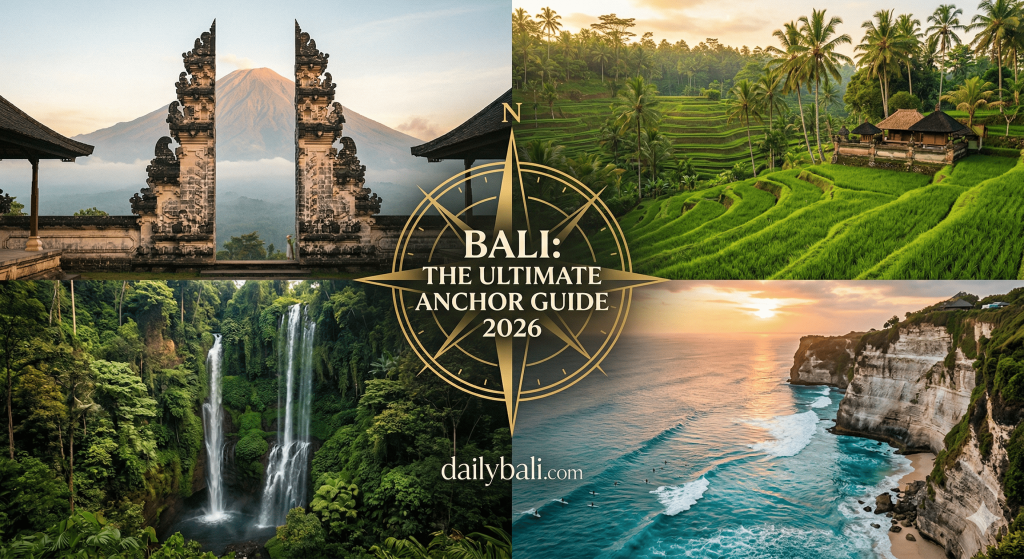
The Soul of Bali: Why the Island of the Gods Remains Peerless
1. South Bali: The Cosmopolitan Coast
South Bali is the island’s engine room—a vibrant, sun-drenched region where traditional ceremonies frequently halt traffic for luxury SUVs. It is the hub of “Boutique Bali.”
Seminyak: The Heritage of Sophistication
Seminyak remains the undisputed capital of Bali’s high-end lifestyle. Unlike the raw energy of Kuta, Seminyak offers a refined experience centered around Jalan Laksmana (Eat Street) and Jalan Petitenget. In 2026, the trend has moved toward “Secret Dining”—unmarked doors leading to world-class mixology bars.
- Must-Visit: Pura Petitenget. This 16th-century temple is a “Sea Temple” that protects the coast. Watching a ceremony here as the sun dips below the horizon offers a stark, beautiful contrast to the nearby luxury resorts.
- The Beach Club Evolution: While icons like Potato Head and Ku De Ta remain essential, look for boutique beach clubs in the Batu Belig area for a more intimate “VIP” atmosphere.
Canggu & Pererenan: The Digital Nomad & Slow Living Capital
Canggu has matured. The wild “backpacker” days are evolving into a sophisticated hub for global entrepreneurs. The real magic now lies in Pererenan, the quieter, more upscale neighbor of Canggu.
Pererenan offers black sand beaches and a “village” feel that Canggu once had. It is the center of Bali’s contemporary café culture—a place where the quality of the coffee is as important as the view of the rice paddies.
Uluwatu & The Bukit Peninsula: The Limestone Kingdom
Uluwatu is defined by its sheer limestone cliffs and world-class surf breaks. The Pura Luhur Uluwatu (Uluwatu Temple) is one of Bali’s six key spiritual pillars, perched precariously on a cliff edge 70 meters above the Indian Ocean.
- The Kecak Fire Dance: Do not miss the 6:00 PM performance. It is a primal, polyphonic chant that tells the story of the Ramayana without a single musical instrument.
- Elite Beaches: Melasti Beach and Pandawa Beach have seen massive infrastructure improvements. In 2026, the beach clubs at Melasti (like Tropical Temptation) offer a “Mediterranean-in-Bali” experience.
2. Central Bali: The Spiritual Heart
As you move inland, the temperature drops, the jungle thickens, and the spirit of Bali becomes palpable. This is Ubud and its surrounding highlands.
Ubud: Art, Healing, and Heritage
Ubud is the soul of the island. It is a place of Puri (Palaces) and Pura (Temples). The Sacred Monkey Forest Sanctuary in Padangtegal is not just a tourist site; it is an important conservation area where three ancient temples are guarded by Macaque monkeys.
For the boutique traveler, Ubud is about “Sanctuary.” High-end wellness retreats and art galleries like the Neka Art Museum or The Blanco Renaissance Museum provide a deep dive into the island’s creative history.
Tegalalang & Kintamani: The Highlands
The Tegalalang Rice Terraces are a marvel of the Subak irrigation system, recognized by UNESCO. In 2026, we encourage travelers to visit early—before 8:00 AM—to witness the farmers tending to the rice in the golden morning light.
Further North, the Kintamani Caldera offers the most dramatic views in Bali. Mount Batur, an active volcano, sits inside a massive ancient crater alongside Lake Batur. The “Cloud Cafés” of Kintamani have become a global sensation, offering views of the volcano that feel like a scene from a fantasy movie.
3. East Bali: The Royal Frontier and Hidden Coves
East Bali is the land of kings and the mighty Mount Agung. While the South is about the future, the East is about the heritage of the Karangasem Regency. This region offers some of the most dramatic landscapes on the island, where volcanic black sand meets crystal-clear bays.
Karangasem: The Majesty of Water Palaces
The Tirta Gangga Water Palace is a masterpiece of Balinese and Chinese architecture. Built in 1946 by the late King of Karangasem, it features tiered fountains, stone carvings, and stepping stones across koi ponds. For the best experience in 2026, visit at 7:30 AM to avoid the “Instagram queues.”
Nearby, Taman Ujung Soekasada (The Water Palace of Ujung) offers a more expansive, European-influenced garden experience overlooking the Lombok Strait. It is often less crowded than Tirta Gangga and offers incredible vistas from its hilltop pillars.
Amed & Tulamben: The Blue Frontier
For those who find peace underwater, Tulamben is home to the USAT Liberty Shipwreck. Resting just 30 meters from the shore, it is one of the world’s most accessible wreck dives. In 2026, the coral growth on the wreck has reached record levels, making it a vibrant metropolis for parrotfish, turtles, and occasional reef sharks.
Amed, with its string of fishing villages, offers a “slow travel” vibe. It is the best place in Bali to watch the sunset over Mount Agung while sitting on a black sand beach with a cold Bintang or a fresh coconut.
4. North Bali: The Hidden North
Crossing the central mountain range brings you to a different Bali—cooler, quieter, and deeply traditional. North Bali is defined by its colonial history in Singaraja and its majestic waterfalls.
Lovina: Dolphins and Volcanic Sands
Lovina Beach is famous for its sunrise dolphin-watching tours. In 2026, the local government has implemented strict “Ethical Dolphin Watching” regulations, ensuring boats maintain a respectful distance from the wild pods. The volcanic sand here is fine and dark, perfect for long, quiet walks.
The Waterfall Kingdom: Munduk & Sekumpul
The highlands of Munduk are famous for coffee, cloves, and cocoa plantations. The air is crisp and often misty.
- Sekumpul Waterfall: Often cited as the most beautiful waterfall in Bali, it is actually a cluster of seven falls hidden deep in the jungle.
- Aling-Aling: For the adventurous, this is a natural water slide where you can jump from cliffs into turquoise pools.
Bedugul: The Icon of the Lake
Pura Ulun Danu Beratan is the “floating” temple seen on the IDR 50,000 note. It is dedicated to Dewi Danu, the goddess of the lake. In the early morning, the mist rolling off the lake makes the temple appear as if it is drifting in the clouds.
5. West Bali: The Untamed Frontier
West Bali is the least visited part of the island, making it a paradise for nature lovers and those seeking total seclusion. It is home to the West Bali National Park (TNBB).
Menjangan Island: The Pinnacle of Diving
Located within the National Park, Menjangan Island offers the best “wall diving” in Bali. The visibility here often exceeds 40 meters, revealing vibrant sea fans and incredible biodiversity. The island is also home to the rare barking deer (Menjangan), which can often be seen swimming in the shallow turquoise waters.
Jembrana & Medewi
For surfers looking for the longest left-hand break in Bali, Medewi is the destination. It is a rocky point break that offers rides of up to 300 meters. The surrounding Jembrana Regency is also famous for Mekepung (Buffalo Racing), a thrilling traditional sport held during the harvest season.
6. The Nusa Islands: A Dramatic Escape
Just a 30-minute fast boat ride from Sanur lie the three Nusa islands: Penida, Lembongan, and Ceningan. They offer a rugged, “Jurassic Park” aesthetic that contrasts with the mainland’s lushness.
Nusa Penida: The Wild One
Penida is home to the iconic Kelingking Beach (T-Rex Bay). While the view from the top is world-famous, the hike down to the beach is only for the physically fit. For a less crowded experience, head to Suwehan Beach or Diamond Beach on the east coast.
Nusa Lembongan & Ceningan: The Boutique Isles
These two islands are connected by the famous Yellow Bridge. Lembongan is perfect for surfing, snorkeling with Manta Rays at Manta Point, and exploring the serene Mangrove Forest by paddleboard. Ceningan offers the Blue Lagoon, a stunning inlet of milky-blue water.
7. The 2026 Practical Travel Toolkit (Everything You Need to Know)
To ensure your 2026 trip is seamless, we have compiled the ultimate logistical brief based on the latest island regulations and trends.
When to Visit Bali
| Season | Months | Pro/Con |
|---|---|---|
| Dry Season | April – October | Best for surfing and trekking; highest crowds. |
| Rainy Season | November – March | Lush green landscapes; high humidity; lower prices. |
| Peak Season | July, August, Dec | Maximum vibes; book everything 3 months ahead. |
Navigating Bali: Transport in 2026
Traffic remains Bali’s biggest challenge. For short trips in the South, Gojek or Grab (motorbike taxis) are the fastest. For day trips to Ubud or the North, we highly recommend hiring a Private Driver. Not only does this support the local economy, but it also gives you an “on-the-go” cultural guide.
Cultural Etiquette: Do’s and Don’ts
- Do: Wear a sarong and sash when entering any temple.
- Do: Use both hands when giving or receiving items as a sign of respect.
- Don’t: Step on the Canang Sari (offerings) on the ground. If you do by accident, a quick “Sorry” to the air is appropriate.
- Don’t: Use your left hand for eating or touching people, as it is traditionally considered unclean.
Frequently Asked Questions (FAQ)
1. Do I need a Visa for Bali in 2026?
Most travelers enter on a 30-day Visa on Arrival (VoA), which can be extended once for another 30 days. Ensure your passport has at least 6 months’ validity.
2. Is the “Bali Belly” still a thing?
Hygiene standards have skyrocketed, but sensitive stomachs should stick to bottled or filtered water. Avoid tap water even for brushing teeth if you are highly sensitive.
3. What is Nyepi?
Nyepi is the Balinese Day of Silence. For 24 hours, the entire island shuts down—no lights, no fire, no travel, and even the airport closes. It is a beautiful day for meditation, but plan your travel dates carefully as you cannot leave your hotel.
Final Thoughts: Your Journey Begins Here
Bali is a place that gives back what you put into it. If you rush, it will feel chaotic. If you slow down and respect the rhythm of the ceremonies and the seasons, it will reveal its magic to you. From the specialty coffee at Gangga Coffee to the spiritual depths of Puri Gangga Resort, we invite you to experience the Bali we call home.
Suksma. We look forward to welcoming you to the Island of the Gods.